
White Jade Orchids 白蘭花
Chun Yin Rainbow Chan
White Jade Orchids 白蘭花
6 October – 13 November, 2026
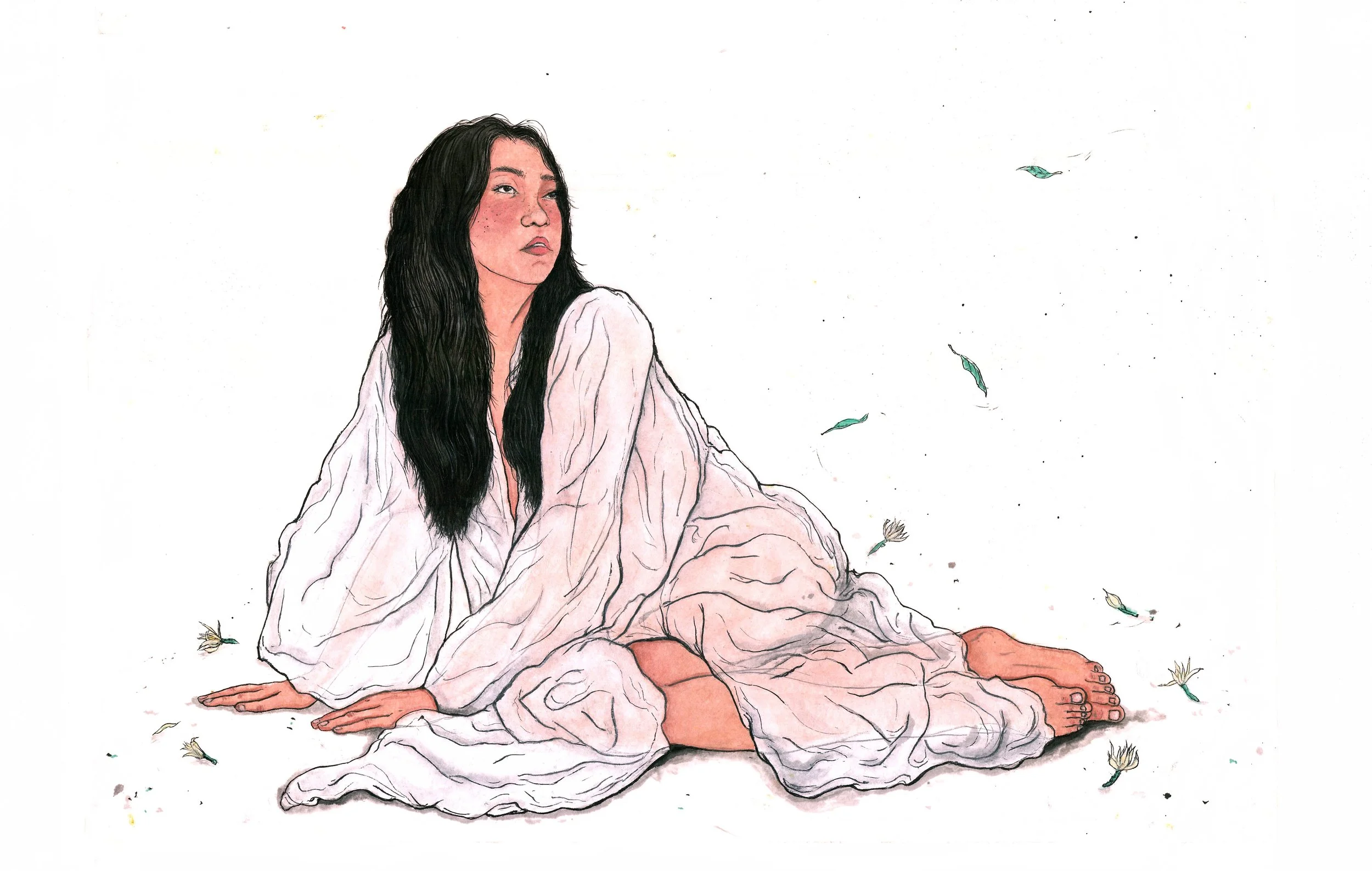
Chun Yin Rainbow Chan, Among The Wilted Blooms, 2026. Image courtesy of the artist.
Artist Statement
It started with a seed. A while ago now, I asked my mum to teach me her mother tongue, 圍頭話 Wai Tau Waa / Wei Tou Hua, a disappearing dialect once spoken throughout Hong Kong’s New Territories. Our conversation sparked what has become a lifelong research project into 圍頭 Wai Tau / Wei Tou women’s cultural knowledge. Since 2017, I have collaborated with female elders in Lung Yeuk Tau village to learn their fading songs and stories. Reconnecting with my Wai Tau roots has spawned a growing body of work across music, performance and visual art, to which this exhibition, White Jade Orchids, contributes.
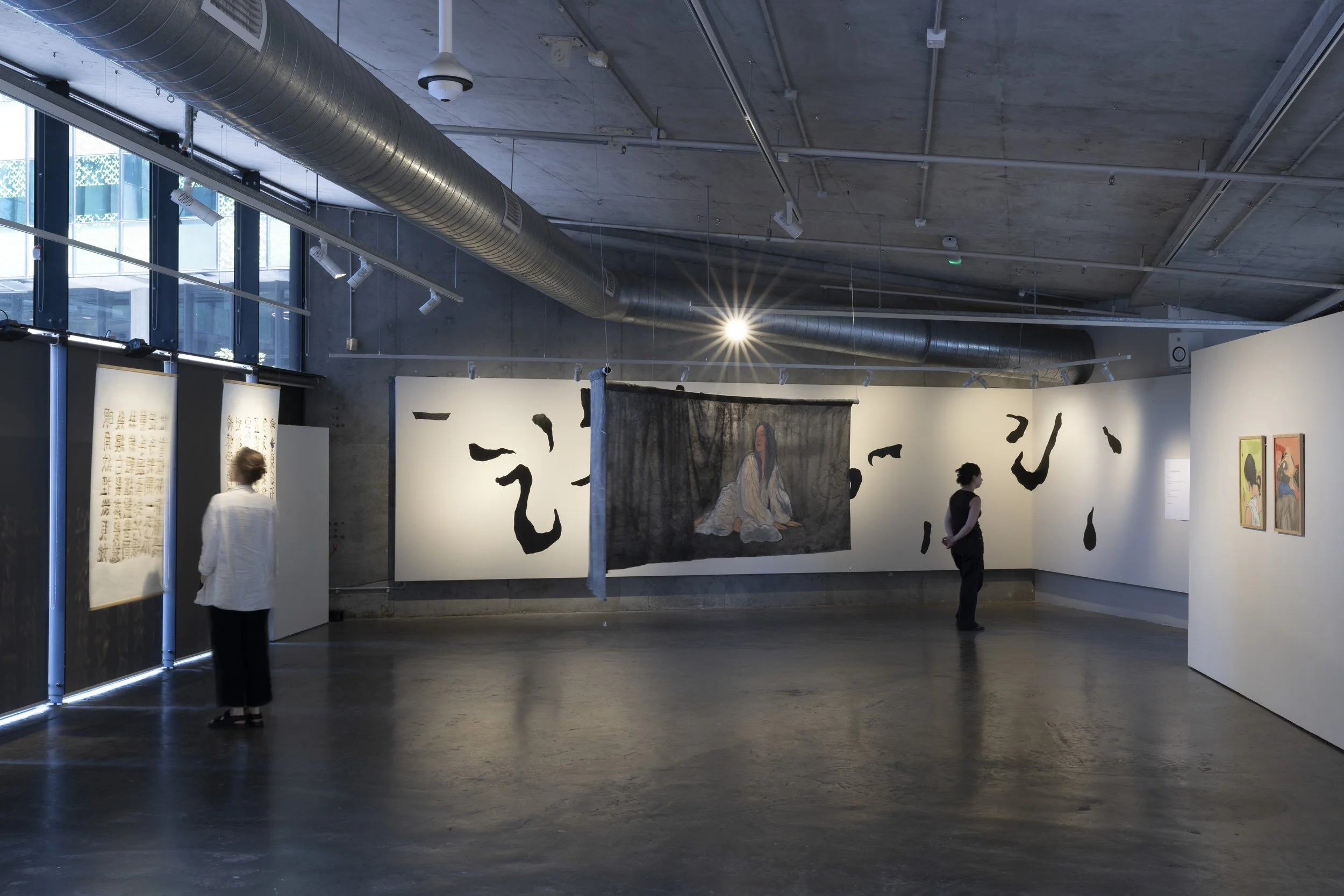
Chun Yin Rainbow Chan, White Jade Orchids 白蘭花, 2026, Installation view. Photography by Jessica Mauer.
One of the most compelling genres of Wai Tau women’s songs is 哭嫁歌, or “bridal laments”: mourning songs historically performed by women in the lead-up to arranged marriages. Becoming a bride was described to me as a kind of death. Her natal ties would be severed, while she remained an outsider to the groom’s family and was often treated harshly. Over several days, women would sing and wail in front of loved ones, mourning this profound sense of loss. The ritual provided a rare public space to express suffering and protest patriarchy, while bidding farewell to their loved ones.
The laments were passed down orally in women-only spaces called 姊妹屋, or “sister houses”, often in the home of a widow who had accumulated musical knowledge over her lifetime. In exchange, young girls helped with chores such as collecting firewood or water from the well. With arranged marriages ceasing in the 1960s, the last women who hold this knowledge are now in their 80s and 90s. My mum recalls how her mother sang. But, like most women in her generation, my grandma did not teach the songs to her daughters as the ritual was no longer practised.
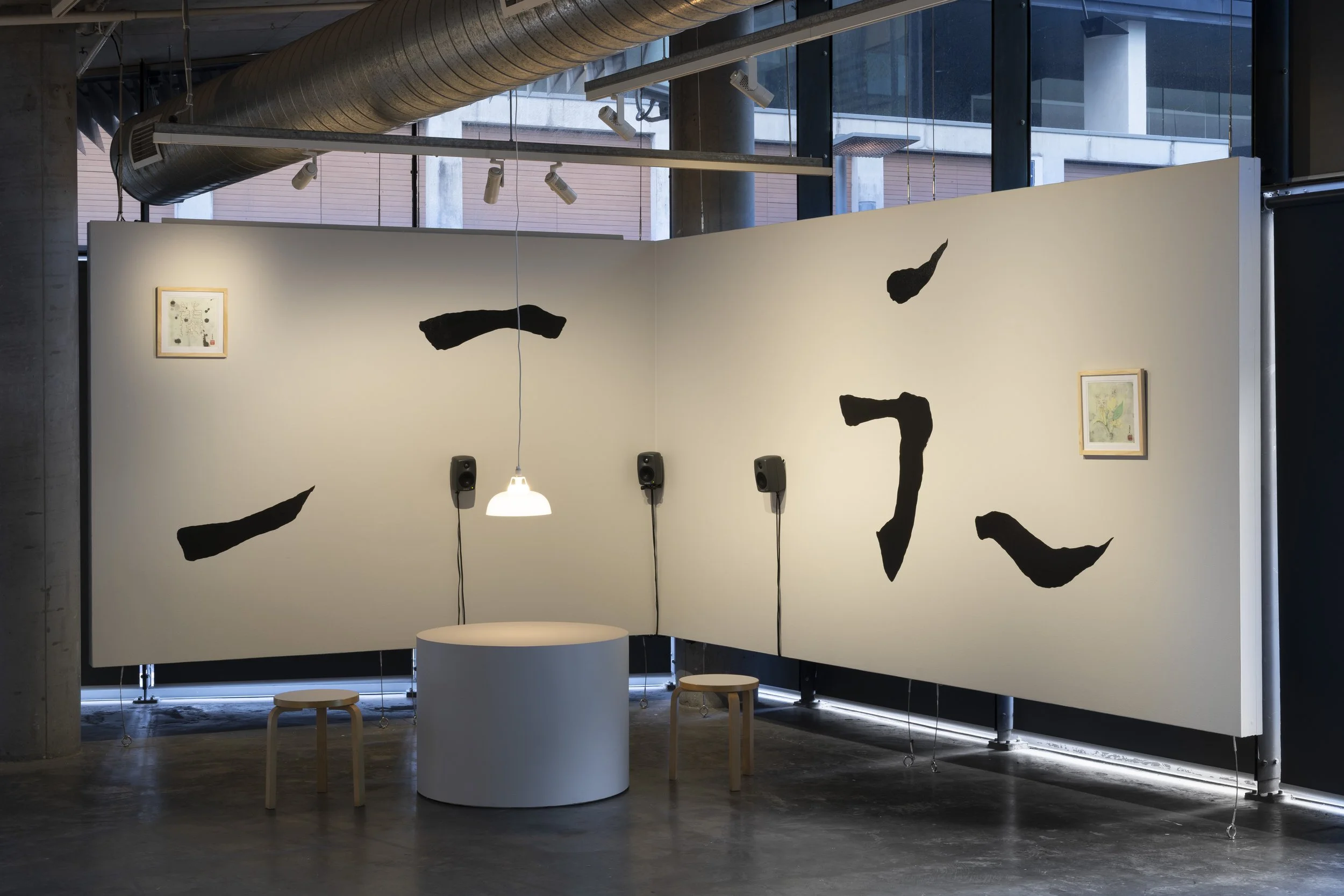
L-R: Chun Yin Rainbow Chan, Little orchid V, 2026, watercolour and ink on xuan paper, 25cm x 25cm. 白 (white), 2026, Acrylic on gallery wall, dimensions variable. In the darkness, awaiting illumination, 2026, multi-channel audio (19:55), lamp shade, LED light bulb, dimensions variable. Little orchid IV, 2026, watercolour and ink on xuan paper, 25cm x 25cm. Photography by Jessica Mauer.
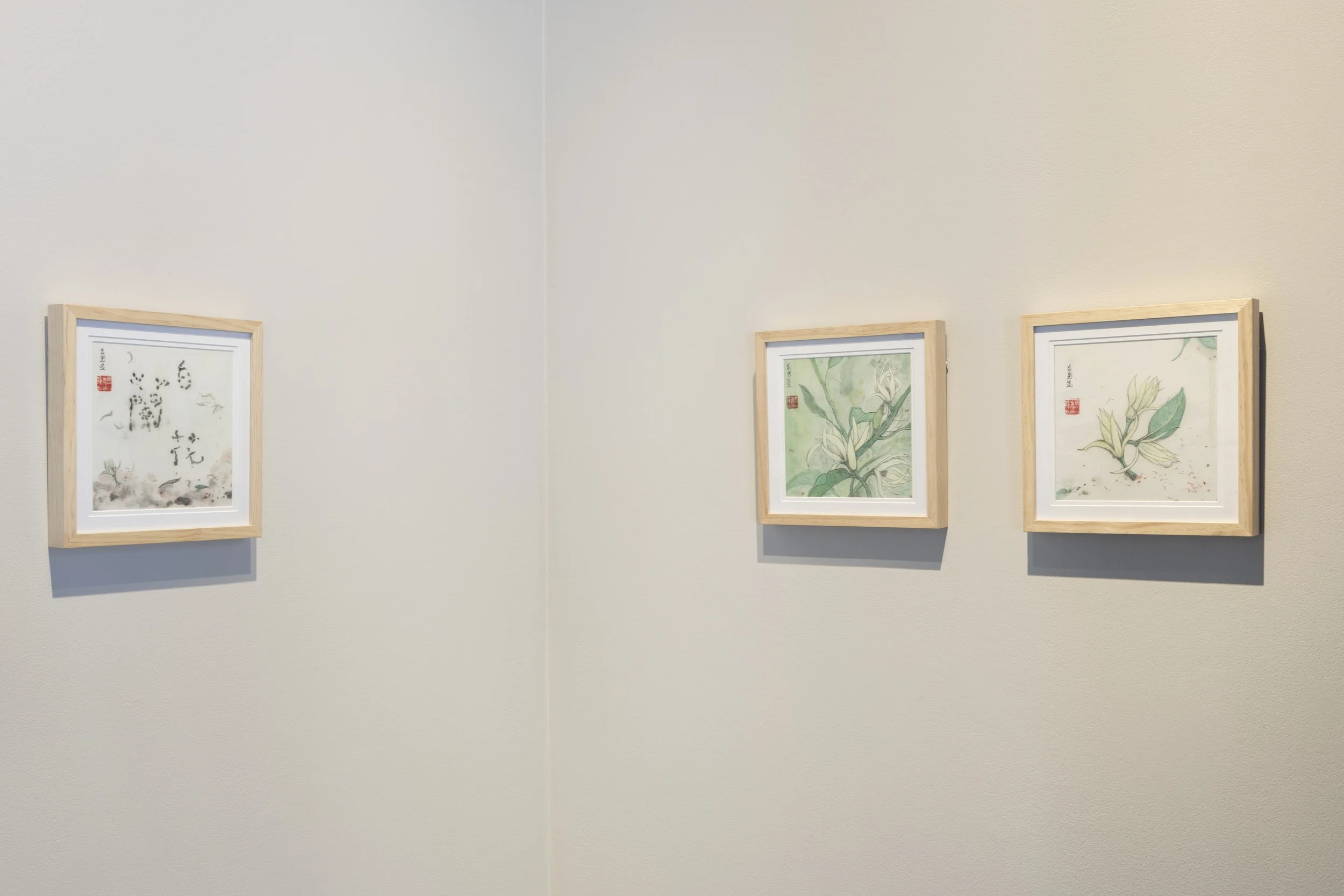
L-R: Chun Yin Rainbow Chan, Little orchid I, 2026, Watercolour and ink on awagami mulberry paper, burn marks, 25cm x 25cm. Little orchid II, 2026, Watercolour and ink on xuan paper, burn marks, 25cm x 25cm. Little orchid III, 2026, Watercolour and ink on xuan paper, 25cm x 25cm. Photography by Jessica Mauer.
The laments use metaphors of native plants, animals and clever wordplay to depict a woman’s inner world. At the centre of this exhibition is a lament addressed to the sisters of the bride-to-be. She sings of clusters of white jade orchids being dispersed by the wind. The flowers, evoking innocence, are thrown into disarray as the sisterhood is broken up. She describes the sorrow churning in her gut, a visceral and bodily portrayal of grief. As girls cannot control their fate and must go where the current takes them, she wishes her sisters a lifetime of peace if they are never to meet again.
The white jade orchid plant (Michelia x alba) is one of the most common species of tree in Hong Kong. Its delicate white blooms emit a clean, sweet and fruity fragrance, evoking memories of street vendors selling fresh buds during the flowering season. For my mum, the scent of the white jade orchid, or 白蘭花 / bak laeng faa in Wai Tau Waa, reminds her of her mother, who, like many village women, used to wear one in her hair. As my grandmother passed away when I was a baby, she exists through stories, certain mannerisms in my mum and the lament melodies when I sing them to the baby growing in my womb.
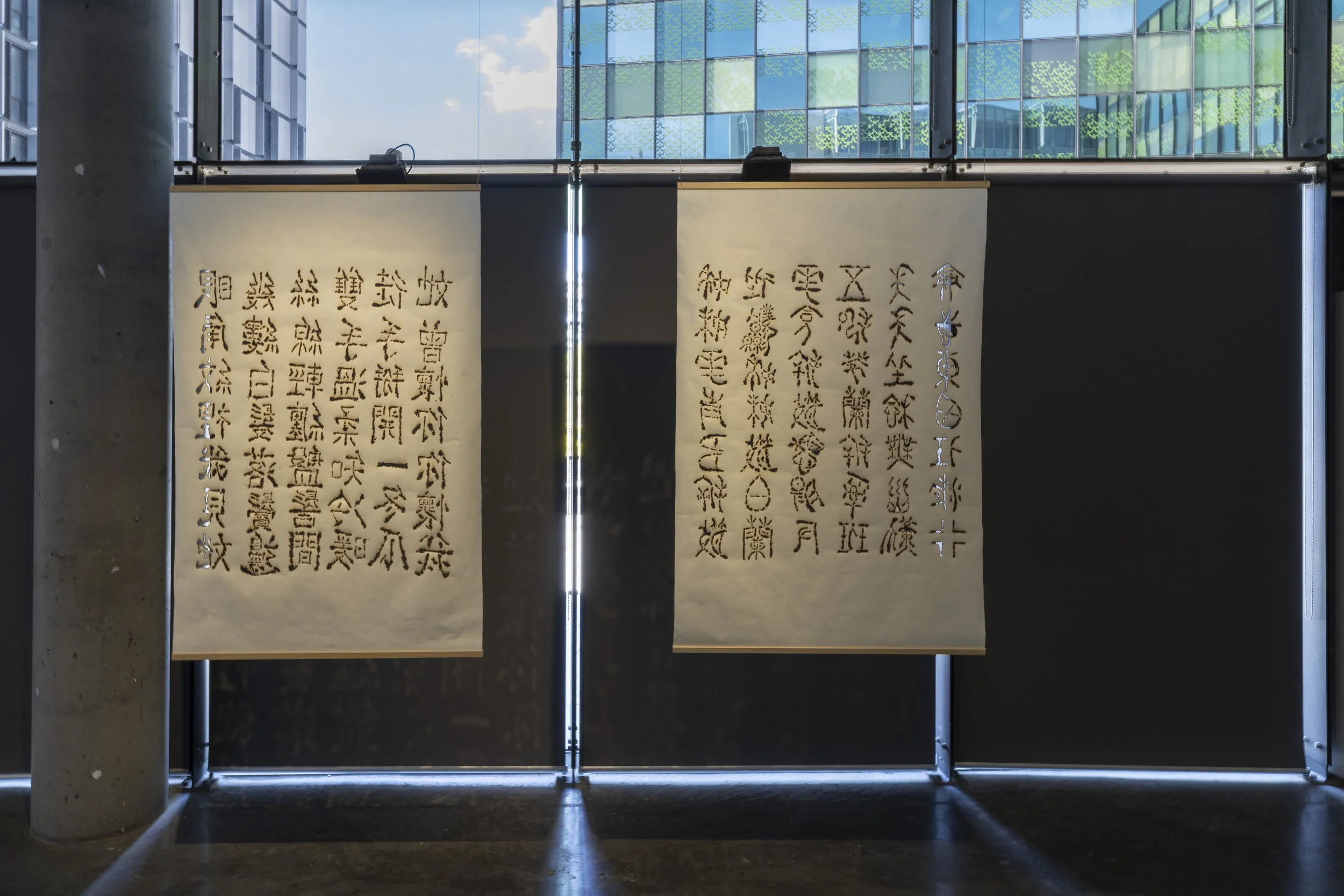
Left, Chun Yin Rainbow Chan, Lament for my sisters, 2026, Awagami shiramine paper, burn marks, 92cm x 140cm. Right, Chun Yin Rainbow Chan, She carried you carrying me, 2026, Awagami shiramine paper, burn marks, Google Translate, 92cm x 140cm. Photography by Jessica Mauer.
Through the symbol of the white jade orchid, this exhibition reflects on matrilineal histories, cultural inheritance, language loss and my own experience of imminent motherhood. A large silk painting, The flowers remember what they have forgotten (2026), shows a figure in a field of former selves, peppered with fallen orchid petals. The silk is suspended in a curve, floating in a mist of white jade orchid fragrance. Smaller watercolour works explore figuration and floral imagery, while larger perforated paper works build upon my experimentation with calligraphy, burning, lyric transcription and creative mistranslation.
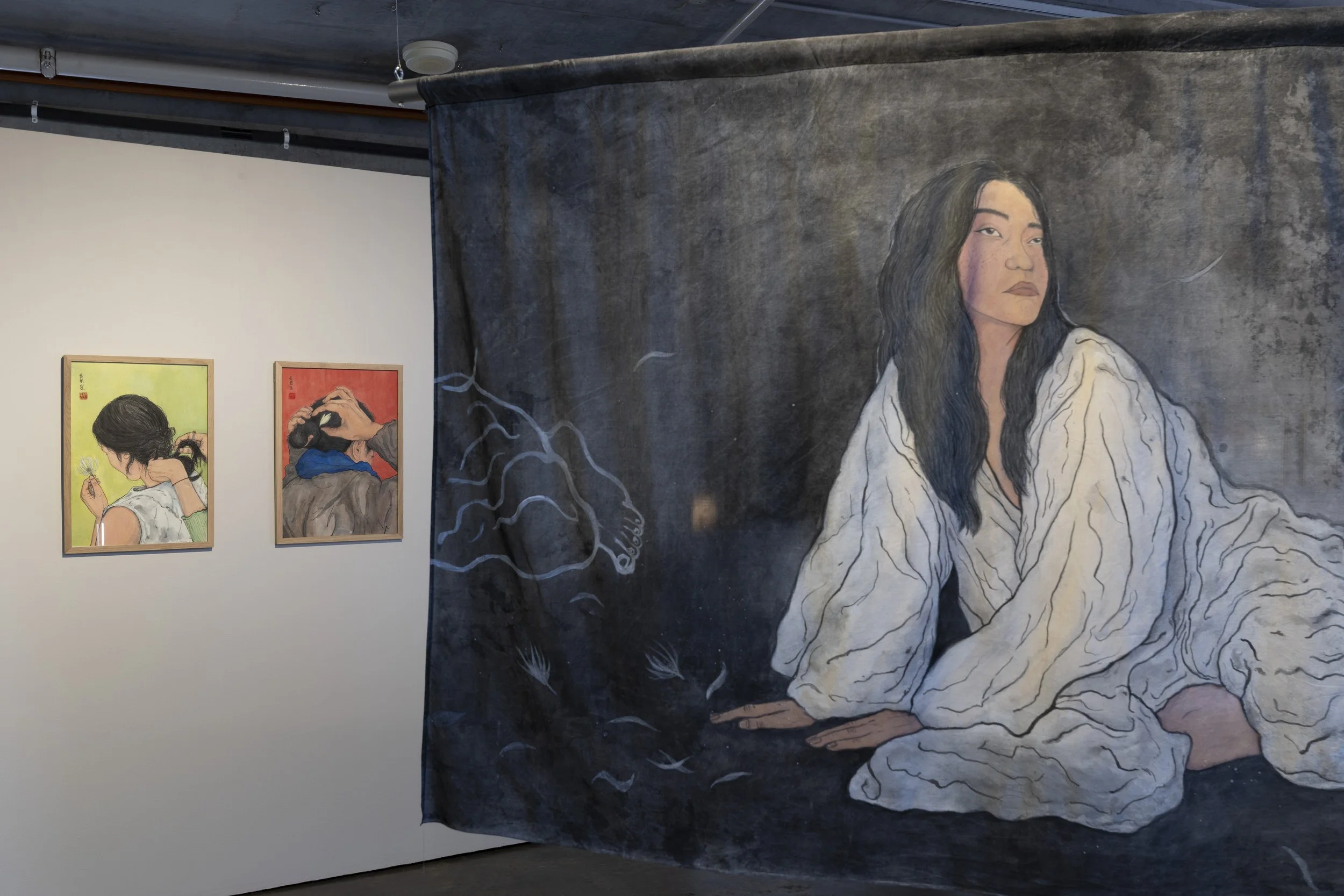
L-R: Chun Yin Rainbow Chan, Mother’s hands and In the face of change, 2026, Watercolour, gouache and ink on xuan paper, 59.4cm x 42cm. The flowers remember what they have forgotten 花憶所忘, 2026, Silk dye on habotai silk, atomised fragrance, freshwater pearls, curved steel rod, 415cm x 105cm. Photography by Jessica Mauer.
There are two sound works in the exhibition — one a graphic score painted onto the gallery wall, and the other a multi-channel sound installation featuring untranslatable Wai Tau phrases, spoken by my mum. The graphic score deconstructs the traditional Chinese character for “orchid” and uses indeterminacy to generate a graphic score for improvised performance. The latter work is an example of “MIDI art”, in which I have illustrated the work’s title in roll notation on Ableton. The visual input determines the musical output, blurring the line between image and sound. In the middle of this installation is an iconic Hong Kong wet-market lampshade, drawing comparisons between an everyday object and everyday Wai Tau words that take on new importance when their very existence becomes threatened.
White Jade Orchids is a meditation on women’s songs and stories, on language and on the importance of remembering what is almost lost. As my life will soon be forever changed through the birth of my first child, this body of work marks a moment of transition while honouring the two women who carried me as a seed — my grandma, who carried my mum in her womb when she was already carrying me.
Exhibition Essay
To breathe, to drift
Responses to Chun Yin Rainbow Chan’s White Jade Orchids 白蘭花
Mikala Tai