
saʊˈdɑːdə
Casey Ayres, Mariia Zhuchenko, Monica Rani Rudhar, and Szymon Dorabialski
saʊˈdɑːdə
11 November - 10 December, 2021

Monica Rani Rudhar, Daughter of the Same House, detail. terracotta, glaze, gold lustre, 2021.. Image courtesy of the artist.
Artist Statement
The word Saudade comes from the Portuguese language. It is a word used to express an emotional state encompassing a longing for someone, something or somewhere that is absent; for the unattainable; or for the very presence of absence itself. It differs from nostalgia in that it can be a yearning for something that may never have existed in the first place. The artists came across this word repeatedly when trying to find a way to explain a feeling they all share as a result of migration. A certain longing for a place - geographical but also cultural, emotional and in time - which may not exist anymore, or had ever existed, which formed so strongly each of their identities yet in many ways feels so foreign.
The artworks in this exhibition give an insight into each of the artists’ personal sense of being in the world. They share the common ground of otherness; with one foot testing the waters of the dominant culture, and the other in an imagined ‘mother country’. The works emerge from the excavations of familial mythology and personal experiences in an effort to acknowledge what came before and a desire to create a place for oneself, existing between multiple places and times.

saʊˈdɑːdə, installation view, dimensions variable. Photography by Zan Wimberley.
Anchoring the Untethered
Historic Portuguese writer, Manuel de Melo, described saudade as “a pleasure you suffer, an ailment you enjoy.” The embodiment and beautiful infliction of saudade can be witnessed throughout Portugal. It is in the distinct palette of colours and patterns on façade tiles used to liven the greyness of historic castles, cities, and ports. It is also romantically and achingly laced in their heady Fado music. The English translation of the word Fado is fate and the Fado genre encapsulates Saudade through bare storytelling—the mysteries of the sea, the pains of a broken heart, homesickness and the pining for a person, time, or a place you may or may not even know.

saʊˈdɑːdə, installation view, dimensions variable. Photography by Zan Wimberley.
While travelling in Portugal, I had noticed saudade-laden conversations allowed travellers, immigrants, expats, and refugees to speak of their homelands while simultaneously, navigating the difficulty and splendour of their current life. The vibrancy of infrastructure in port cities such as Porto and Lisbon, were grounded by the poetic everyday expressions of the suadade, particularly in the incoming and outgoing of goods and people. They also appear in the consistent interventions of Fado music and through unabashed conversations with strangers about philosophy, sciences, longing and melancholy for the past, the future or a time that seemed simpler. All without fear of it sounding like a complaint or wistful meandering.
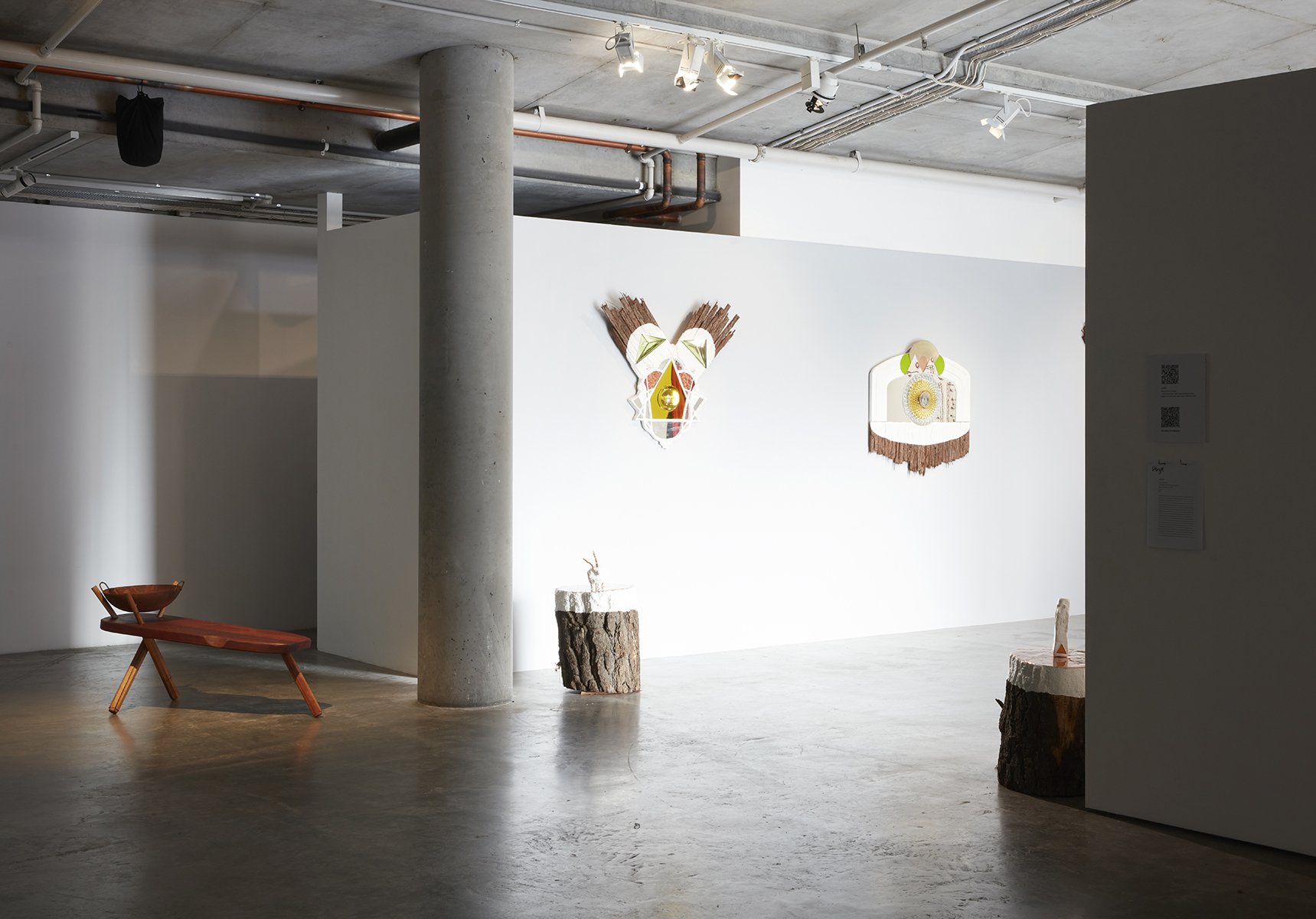
saʊˈdɑːdə, installation view, dimensions variable. Photography by Zan Wimberley.
In stark contrast, the natively Australian ‘tall poppy syndrome’, which is entrenched in colonial values of cutting people’s victories, desires, and pride down through a smokescreen of fairmindedness, seems to restrict and choke the seemingly aimless pursuit of such yearning. It could also be a contributing factor to why the arts are undervalued in Australia. Saudade makes room for yearning and allows the yearning to swirl, to roam, to breathe. In this allowance, possibilities of what was, what could be or could have been gives permission to the expression to achieve its fate, without prematurely crushing its complexity.

Monica Rani Rudhar, ..And Since Then I Didn’t Grow Anything There, single channel video, soil, bricks, 7:42 mins, 2021. Photography by Zan Wimberley.
By way of synchronistic means, artists Casey Ayres, Mariia Zhuchenko, Monica Rani Rudhar and Szymon Dorabialski collectively decided that saudade adequately captures the feelings of displacement created by immigration, together with the complexities of their settler status on Gadigal land. The artists poetically and experientially explore the intricacies of being othered in Australia and are piecing together identities which appear fragmented.

saʊˈdɑːdə, installation view, dimensions variable. Photography by Zan Wimberley.
Casey Ayres’ practice tenderly and absurdly traverses his experience of the socio-political instability created by his dual identities. Casey’s determined material gestures in Peaceful Solutions take spiritual and cultural rituals from his mother’s Chinese heritage and uses them to speak about and to his Australian father. Chinese Hell money lingers on the boundary of life and death, as material worth becomes necessary to carry over into the afterlife. While water slowly and uneasily drips to crudely convene in the bottom of a wok, waiting for a sitter to make sense of its presence and potential.

saʊˈdɑːdə, installation view, dimensions variable. Photography by Zan Wimberley.

Casey Ayres, A Nod is as Good as a Wink to a Blind Horse, Jarrah, Iron Bark, Tasmanian oak, steel, canvas, 61 x 115 x 36cm, 2020. Photography by Zan Wimberley.

Casey Ayres, 12,489 Prayers, Jarrah, canvas, acrylic, 2010 x 95 x 14cm, 2021. Photography by Zan Wimberley.

saʊˈdɑːdə, installation view, dimensions variable. Photography by Zan Wimberley.
During a time of travel restrictions, Mariia Zhuchenko re-established her own ‘motherland’ by revisiting her parent’s firsthand VHS tapes and their re-telling of memories and stories to visualise a place that no longer exists. In O, Wonderous Moment! Mariia recounts her parent’s simple desire to travel after the oppression faced by the people of the Soviet Union and the state’s subsequent dissolution in 1991. The curtains of lace cushion the viewer, as Mariia generously invites strangers to witness a major historical and political shift through the free and humble moments of the past and present desires of her parents, alongside her.
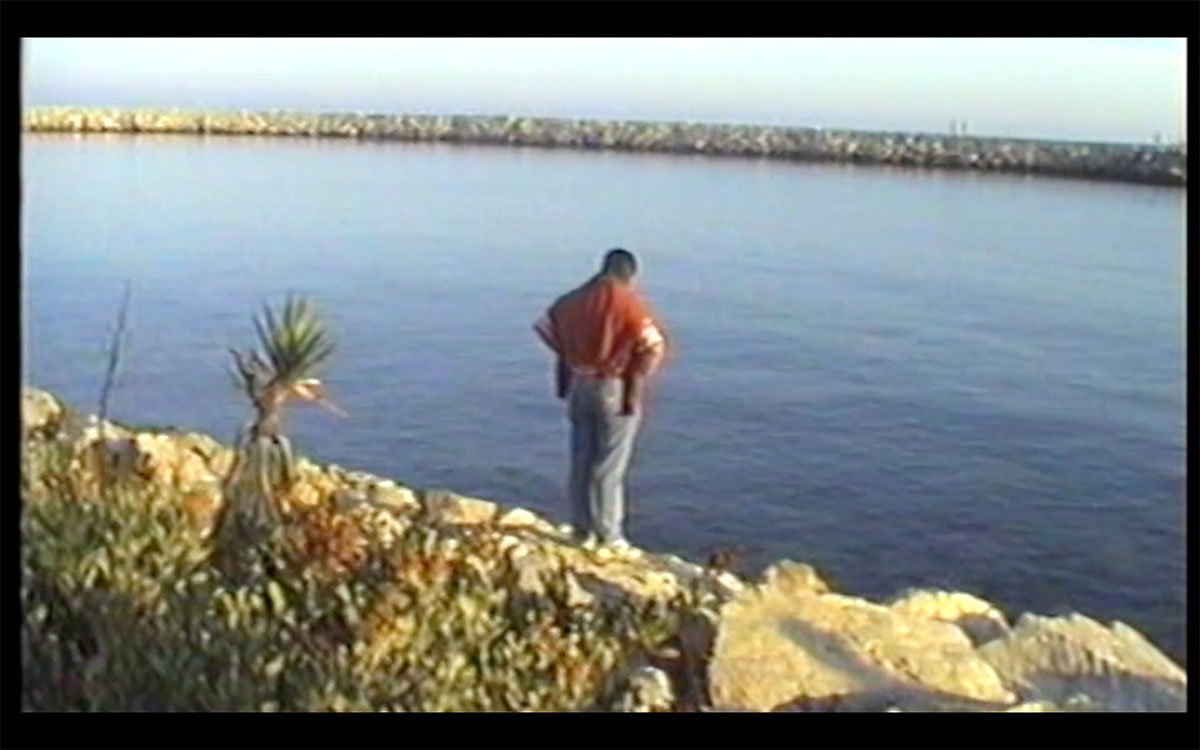
Mariia Zuchenko, O Wonderous Moment', single channel video, 14min 17s, 2021. Image courtesy of the artist.

saʊˈdɑːdə, installation view, dimensions variable. Photography by Zan Wimberley.
Through the acts of labour embedded within her soil installation and material gestures of clay, Monica Rani Rudhar’s practice digs, unearths, and pieces together the value of jewellery as heirlooms in India and its ancestral significance in her cultural lineage. Monica’s aunty in India gifted her with gold earrings at her birth, and these earrings continue to be a precious symbol and tangible connection back to a home and ancestry that is unfamiliar to her. Across multiple poetic experiences between her, her father, and their family and through efforts of assimilation, assemblage and the potential loss of precious heirlooms, Monica finds and reclaims cultural knowledge and parts of herself by amplifying the implicit value of Indian jewellery.

Monica Rani Rudhar, Daughter of the Same House, glazed terracotta, Gold Lustre,15 cm x 30cm, 2021. Photography by Zan Wimberley.

saʊˈdɑːdə, installation view, dimensions variable. Photography by Zan Wimberley.

Monica Rani Rudhar, Matka Kamarbandh 1-7, glazed terracotta, waist chain, dimensions variable, 2021. Photography by Zan Wimberley.
Szymon Dorabialski’s practice is rich with distinctive, mysterious, and recurring symbology which only he has witnessed. Szymon continually interrogates of cycles of death and rebirth and explores realms which are accessed through altered states of consciousness. For this exhibition, Szymon has reclaimed what he has found but questions if his ‘othering,’ even in the subconscious realm, had been further altered through the dislocation of his and his family’s experiences of their mother country. Through an idiosyncratic process of hunting and retrieving found materials in his surroundings, Szymon has alchemised ornate and reflective objects that create portals back to his Polish origins and even farther into more metaphysical origins.

Szymon Dorabialski , Euler Flot, found mirror, pine bark, stained glass, rope, oil paint, 2021.

saʊˈdɑːdə, installation view, dimensions variable. Photography by Zan Wimberley.

Szymon Dorabialski , Nadir, found mirror, pine bark, projector lens, copper, oil paint, 2021. Photography by Zan Wimberley.

Szymon Dorabialski , Zenith, found Glass, mirrors, oil paint, brass fixture, 2021. Photography by Zan Wimberley.
Each artist generously invites viewers into the process of their piecing together these joyous, heavy, and beautifully separated fragments. They have courageously absorbed themselves in these personal ritualistic acts of retrieval and integration by gathering memories and materials to recreate and interpret experiences of family rituals, traditions, fascinations, ancestry, geopolitics, and oral histories. These acts mark the desire to make sense of an intrinsic part of their being that is seemingly unfamiliar and unknown, which is something only a deep, untranslatable longing would allow.
Audrey Newton
Roomsheet
Exhibition essay by Audrey Newton
Audio file for Monica Rani Rudhar, ...And Since Then I Didn’t Grow Anything There video