
Coca-Colonized
Marikit Santiago
Coca-Colonized
1 March - 7 April, 2018

L-R: Marikit Santiago, Be, acrylic, oil and pyrography on MDF placemat, 50 x 40 cm, (2017); Blessed Virgin Fierce, acrylic, oil and pyrography on ply, 135cm x 65cm, (2018). Photography by Document Photography.
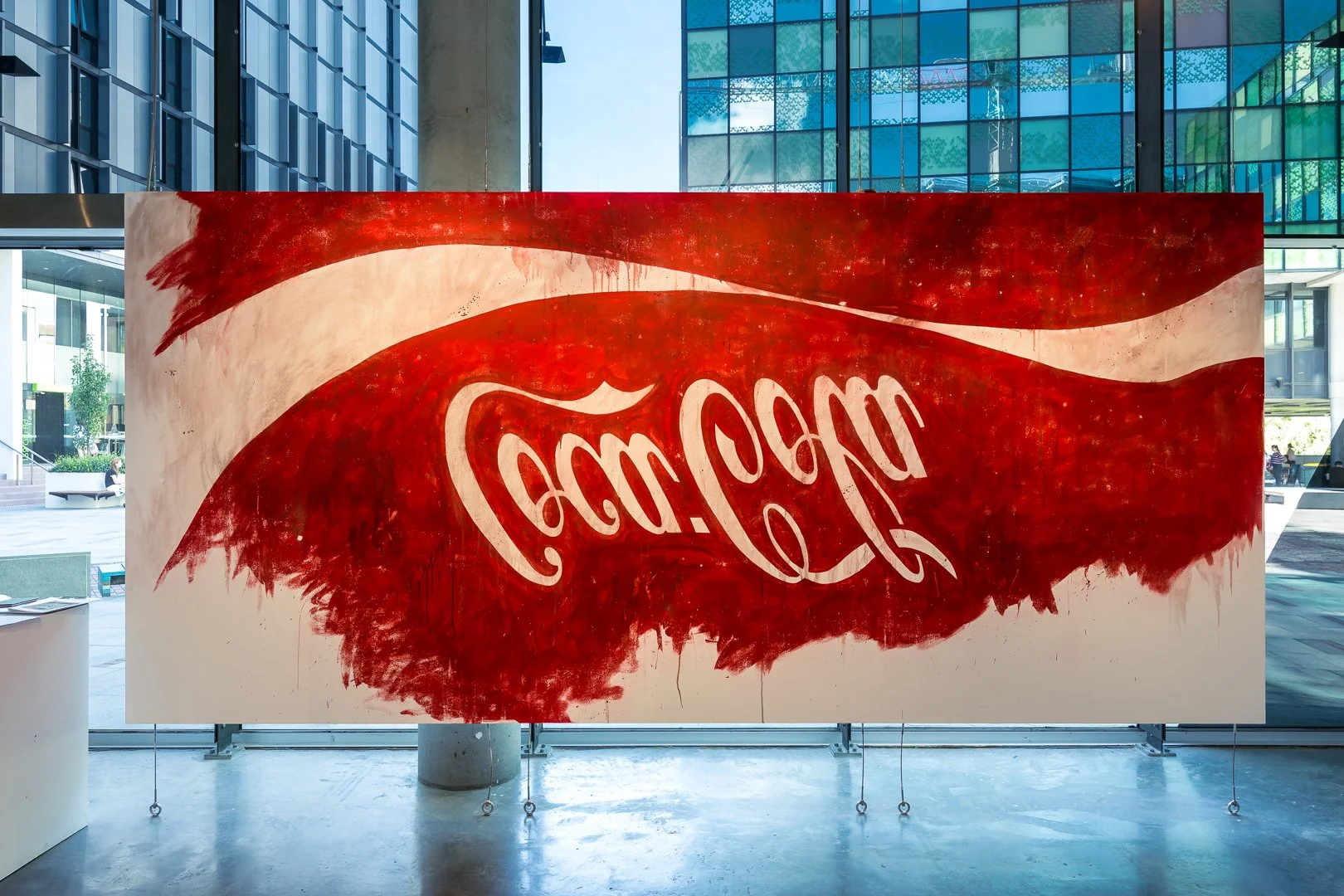
Marikit Santiago, Coca-Colanisation, installation view, 2018. Photography by Document Photography.
Artist Statement
“Coca-Colanization” is the term used to describe the globalisation of American culture through popular American products such as Coca-Cola. In the context of this exhibition, the term is an access point for discussions around colonial occupation in the Philippines and subsequent attitudes conditioned by a Western presence in a developing world. The show aims to illustrate the competing and complex tension between my dual cultural identities as an Australian with Filipina ethnicity, but also demonstrate the established pattern of colonial benevolence between Australia and the Philippines.

Marikit Santiago, Blessed Virgin Fierce, acrylic, oil and pyrography on ply, 2018. Photography by Document Photography.
The very concept of aid is a vestige of colonial occupation when imperial powers considered their political and economic dominance served to uplift the welfare and moral condition of their subjects. This paternal relation of dependency is demonstrated by Australia’s position of authority as the white, Western, developed nation and the relegation of the Philippines as the non-white, non-Western developing nation. The Philippines, with an established obedience towards white powers, is reduced to a state of colonial dependency as a result of the nation’s long history of both Spanish colonial control and North American imperialism. Both Spain and the US; ‘white’ nations of power, both executed dominance and although in different forms, still continue to influence the Philippines and its diaspora today. Hence, race (and whiteness in general) implies socio-cultural progress; an attitude described as ‘colonial mentality’. This is examined in the appropriation of an American celebrity and canned food.

Marikit Santiago, Mary Manananggal (2018), second hand children’s garments, towels, linen, found mannequin, dress-maker pins, thread, hot glue gun, packing tape, masking tape, dimensions variable. Image by Document Photography.
“Coca-Colanized” accesses materials that would normally be donated to family in the Philippines, primarily my own children’s outgrown clothes and shoes, second hand toys as well as other domestic items such as linen and towels. These articles become symbolic of Western privilege in excess. Withdrawing them from donation in this context also exercises what I consider a Western privilege; to make art. The work would take the form of sculptures and installation, that aim to re-contextualise the excess garments and subvert their perceived value.